
8615533905070
8617367792098
Boron Oxide B2o3 CAS 1303-86-2
Boron Oxide B2o3 CAS 1303-86-2
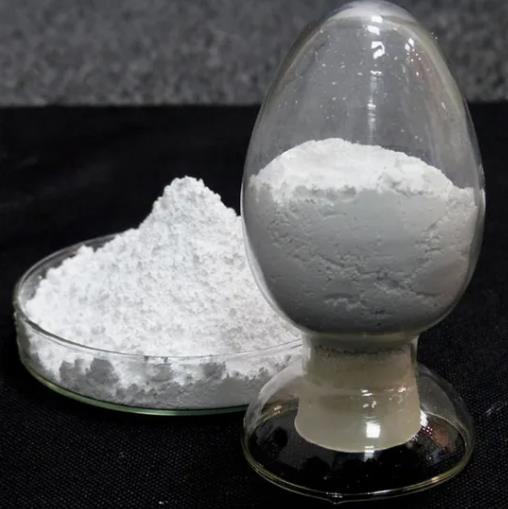
Boron Oxide, colorless vitreous crystal or powder, melting point 450°C, has strong water absorption, so it should be stored in a dry environment to prevent water absorption and deterioration leading to a decrease in content. Slightly soluble in cold water, easily soluble in hot water , Boric anhydride is colorless glassy crystal or powder, tasteless. It can strongly absorb water in the air to form boric acid, which can be reduced to monomer boron by alkali metal at high temperature. The density of crystalline boron oxide is 2.46g/cm3, and the density of amorphous boron oxide is 1.80-1.84g/cm3.
Boron oxide (chemical formula :B2O3) is the most important oxide of boron. It is a white waxy solid, usually existing in an amorphous state and difficult to form crystals, but it can crystallize after high-intensity annealing. It is one of the most difficult substances to crystallize known. This product can be used as a flux for the decomposition of silicates, a dopant for semiconductor materials, a fire-resistant additive for paints, and for the production of elemental boron and various borides, etc. The product has a wide range of applications. In the color imaging manufacturing industry, it is mainly used as a low-melting-point glass raw material for manufacturing picture tube components and for sealing (screens and cones). It can also be used as a catalyst for organic synthesis, an additive for paints and high-temperature lubricants, an additive for ceramics, special glass and solders, etc.
2. Technical Standard
High Quality Boron Oxide CAS 1303-86-2
| Melting point | 450 °C(lit.) |
| Boiling point | 1680 °C |
| density | 2.46 g/mL at 25 °C(lit.) |
| vapor density | >1 (vs air) |
| Fp | 1860°C |
| storage temp. | Inert atmosphere,Room Temperature |
| solubility | 36g/l |
| form | pellets |
| color | White |
| Specific Gravity | 2.46 +/- 0.01 |
| PH | 4 (10g/l, H2O, 25ºC) |
| Odor | Odorless |
| Water Solubility | 36 g/L (25 ºC) |
| Sensitive | Hygroscopic |
| Test items | Specifications |
| Assay | 99.0%min |
| Moisture | 2.00% |
| Particle Size Distribution | On 1.700mm Max.1.0 Through 0.150mm Min. 3.0 |
| Ferric | 0.002% max |
| Appearance | White powder |
3. Application Fields and Highlights:


Boron oxide (B2O3), as an important inorganic compound, has multiple functions and applications:
1. Preparation of elemental boron and fine boron compounds: Boron oxide can be used to prepare elemental boron and fine boron compounds.
2. Manufacturing various glass products: Boron oxide can be combined with multiple oxides to produce borosilicate glass, optical glass, heat-resistant glass, instrument glass, glass fibers, and light protection materials with characteristic colors.
3. Fire-resistant and oleophobic additive and desiccant for paints: Boron oxide can be used as a fire-resistant and oleophobic additive and desiccant for paints.
4. Ceramic glazes: Boron oxide is applied in high-end ceramic glazes and can improve the technical indicators of ceramic products.
5. Catalyst: Boron oxide can be used as a chemical catalyst.
6. Inhibiting the oxidation reaction of carbon/carbon composites: Boron oxide can be used as an inhibitor. By depositing different amounts of inhibitors on the carbon surface through the impregnation process, the oxidation rate can be reduced.
7. Accelerator for atomic transfer radical polymerization: Boron oxide can be used as an accelerator in the research on accelerating the atomic transfer radical polymerization of styrene.
8. Impact on the morphology of alumina fibers: During the preparation of alumina fibers, the addition of boron oxide can affect the morphology of the fibers.
1. Preparation of elemental boron and fine boron compounds: Boron oxide can be used to prepare elemental boron and fine boron compounds.
2. Manufacturing various glass products: Boron oxide can be combined with multiple oxides to produce borosilicate glass, optical glass, heat-resistant glass, instrument glass, glass fibers, and light protection materials with characteristic colors.
3. Fire-resistant and oleophobic additive and desiccant for paints: Boron oxide can be used as a fire-resistant and oleophobic additive and desiccant for paints.
4. Ceramic glazes: Boron oxide is applied in high-end ceramic glazes and can improve the technical indicators of ceramic products.
5. Catalyst: Boron oxide can be used as a chemical catalyst.
6. Inhibiting the oxidation reaction of carbon/carbon composites: Boron oxide can be used as an inhibitor. By depositing different amounts of inhibitors on the carbon surface through the impregnation process, the oxidation rate can be reduced.
7. Accelerator for atomic transfer radical polymerization: Boron oxide can be used as an accelerator in the research on accelerating the atomic transfer radical polymerization of styrene.
8. Impact on the morphology of alumina fibers: During the preparation of alumina fibers, the addition of boron oxide can affect the morphology of the fibers.


Hotline: +86-15533905070, from 9 am to 5:30 pm, Monday to Friday.
Email: admin@hbyanguan.com,slaes03@hbyanguan.com丨Mob: +8615533905070 丨
WhatsApp: +8615533905070,+8617367792098
Add: No. 106 Minzu Road, Qiaoxi District, Shijiazhuang City, Hebei Province, China
Copyright(C) 2018-2025 All Right Reserved. Hebei Yanguan Technology Co., Ltd. Design by www.hbyanguan.com丨SiteMap